
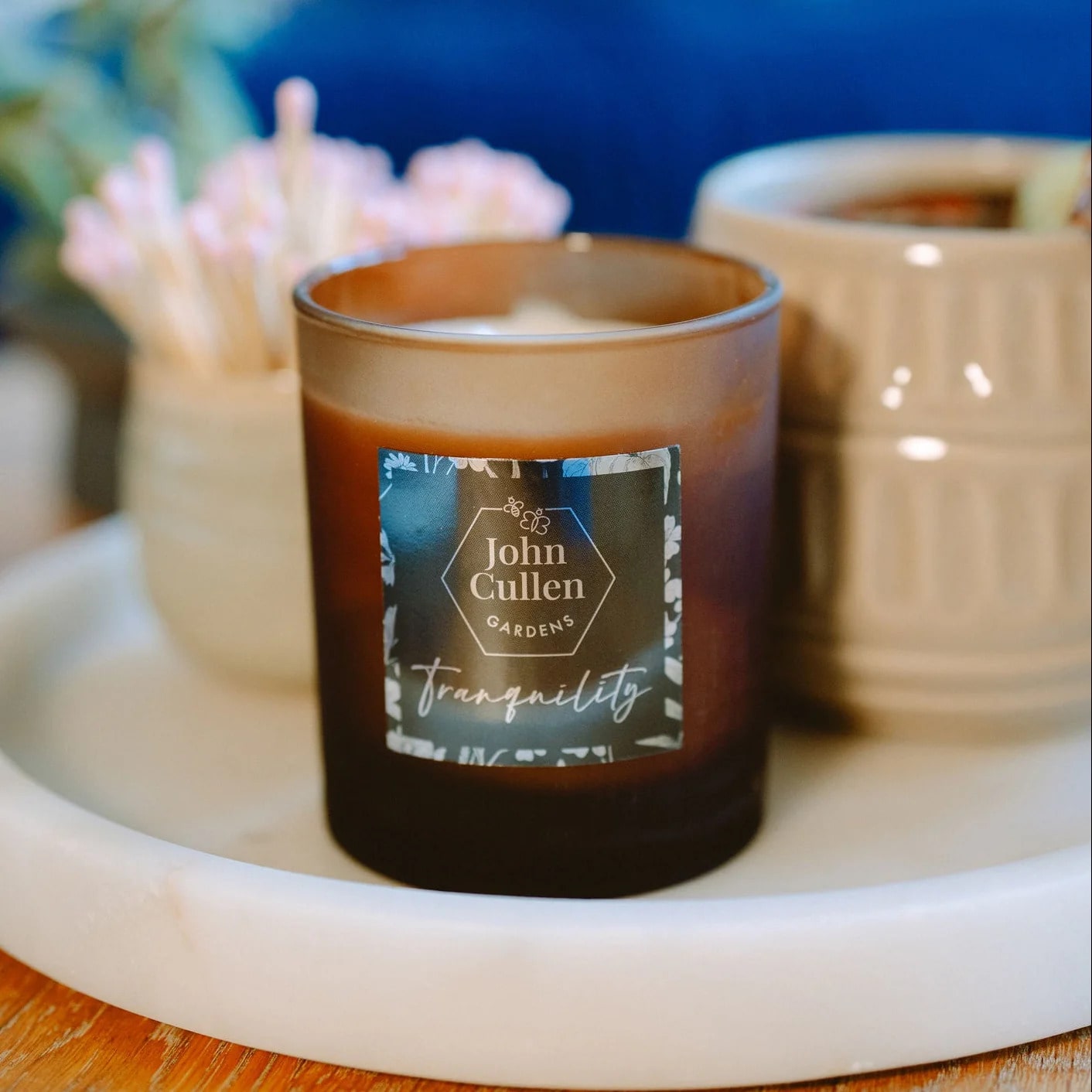
At John Cullen Gardens we are passionate about our Botanical Scented Candles
Back in November 2016, one of our regular customers at the London Farmers Market in Pimlico planted a seed in my head. Having bought several pots of mint from us - of varying varieties and during different seasons over the years - on that chilly November day she told us she was desperately missing the scent that would waft from her mint plants as she brushed past them on warmer days to have her daily coffee on the patio.
In fact, as the smell of mint instantly makes her feel awake and revitalised, to bring this reviving scent indoors, she would often cut the longer stems of her plants and pop them in a vase, which she then kept in her bathroom. She could then run her hands along the stems to release the gorgeous essential oils from within the plants at any time of the day.
So, this all got me thinking about what I could potentially do for our customers who might be missing such vital summer botanical scents. And the answer I came up with was obvious – candles! So, I booked a course to understand more about how candles are made and how I could produce botanical candles that would smell as good as the real thing.
Now, from the outside looking in, this sounds quite simple but - as with anything - a lot of research goes into producing quality products like this. I almost felt as though I was back in a chemistry class; I learnt that the size and type of vessel selected determines the size of the wick; that the medium that the vessel is made from also has an impact; that the percentage of oil is vital, as is the type of essential or blended oil that is used. And, of course, one must decide which wax to use. All these variables together have an impact on the quality of the final product.
I was keen to produce a quality candle, as they hold a very sentimental place in my heart. My mother loved to have a candle burning and so it was my absolute go-to Mother’s Day gift for several years. One year I found a lovely candle cleverly crafted to look like a bowl of fruit. Mum refused point blank to ever light this candle, claiming that it was too beautiful to burn. Since Mum passed away, this candle now lives on my bookcase and, like her, I refuse to light it.
Candles also featured on our holidays. During every holiday I had with Mum we would find a church and venture in to light a candle in Dad’s memory. Even now, every time I light a candle, I am always taken back to those special moments.
So, determined to do Mum proud, in my quest to seek out the perfect candle, I spent hours researching wax, oils, wicks and vessels. I discounted paraffin wax from the process entirely, as they are a direct byproduct from the petroleum industry and are the worst culprits when it comes to “sooting”. Also, I just don’t find them a clean burn and, no matter how much it is claimed that it is clean, I don’t want to be burning a petroleum product in my house. The initial batch of candles that we created were a pure soy wax, however I have since discovered that by blending soy, beeswax and coconut wax, you achieve a much longer burn time.
I also ruled out the use of tins for containing the candles since the tin heats up to a much higher temperate than glass and this can lead to problems with burns, especially if the tin candle is placed directly onto, say, a wooden table or window ledge.
Then of course there was the scent. For some of our candles we use a pure essential oil - such as the oil used to produce the Rosemary candle - but for most of our candles we now create a blend of essential oils. As more candles have been produced, I have become bolder with the blends and am very proud of our current range of candles that suit all moods and occasions.
All our candles now come boxed, making them an even better gift for occasions such as Christmas, Valentine’s Day and Mother’s Day.
Do take a moment to browse our candles on our website! Click here